
Vinije Haabo & Totomboti Collective
Totomboti Collective is a collaboration of artists, researchers and writers from Suriname and the Netherlands. The collective is committed to researching, preserving and promoting the Saamaka language and culture.
Totomboti's work has its roots in the forest, the world of the gods and the shared cultural heritage of the ancestors. The founders of Totomboti Collective are Edje Doekoe and Toya Saaki, further members are Vinije Haabo and Marjet Zwaans. They are also the founders and managers of the Saamaka Museum, which has existed since 2009 in Piki Seei on the Upper Suriname River.
Totomboti is best known for its massive wooden sculptures and benches that are widely known nationally and internationally, with projects such as Kanda Hanka/Anchoring Songs (financed by Mondriaan Fund), Ton yeke ton yelele (Buro Stedelijk), Tete mu teete (Oerol Festival) and Awoonenge Pindi (Culture Fund).
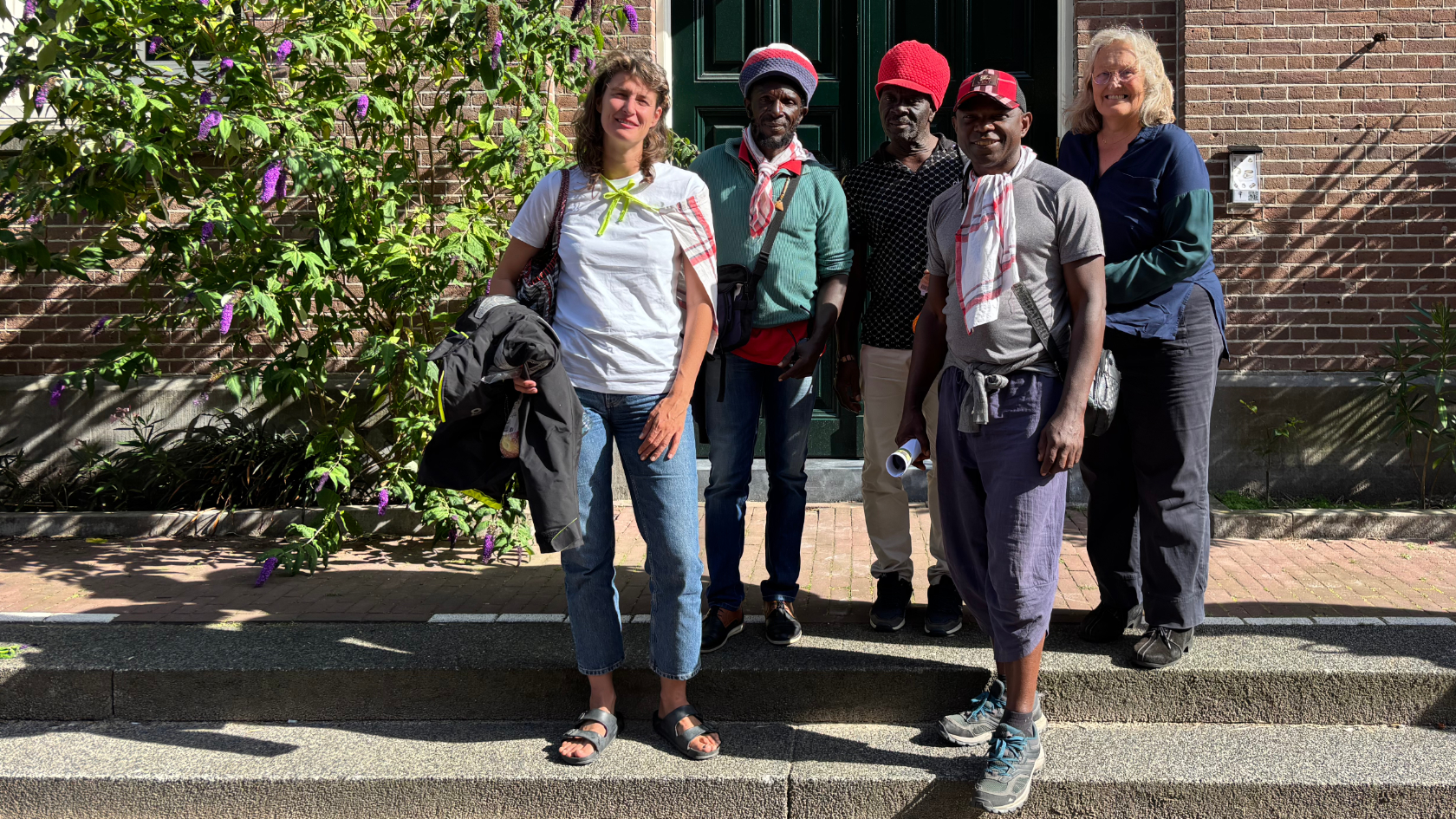
Vinije Haabo is an expert on Saamaka culture and language. He grew up in Pikin Slee and was among the first generation allowed to enjoy education after the construction of the village school in 1980. He closely witnessed how the village elders struggled with the arrival of the school and the Rasta movement. After primary school, he left for further studies in Paramaribo, where he was accommodated in a boarding school run by the Fathers and Brothers. But Vinije always maintained close ties with Pikin Slee. He partnered with Totomboti to renovate and open the village school after the internal war (1986–1992). He started actively recruiting teachers and motivating them to work at the school in Pikin Slee through language lessons and village visits. At the turn of the century, he left for Leiden to study African linguistics so that he could develop a spelling for the Saamaka language. He later moved to his current hometown of Wageningen, where he studied International Development Studies. As a journalist and activist, he has served as a bridge between the Saamaka people and the outside world for decades. He advises Totomboti, Saamaka Museum and the Association of Saamaka Authorities (VSG). He has also developed spelling and written an unpublished Great Dictionary of the Saamaka Language.
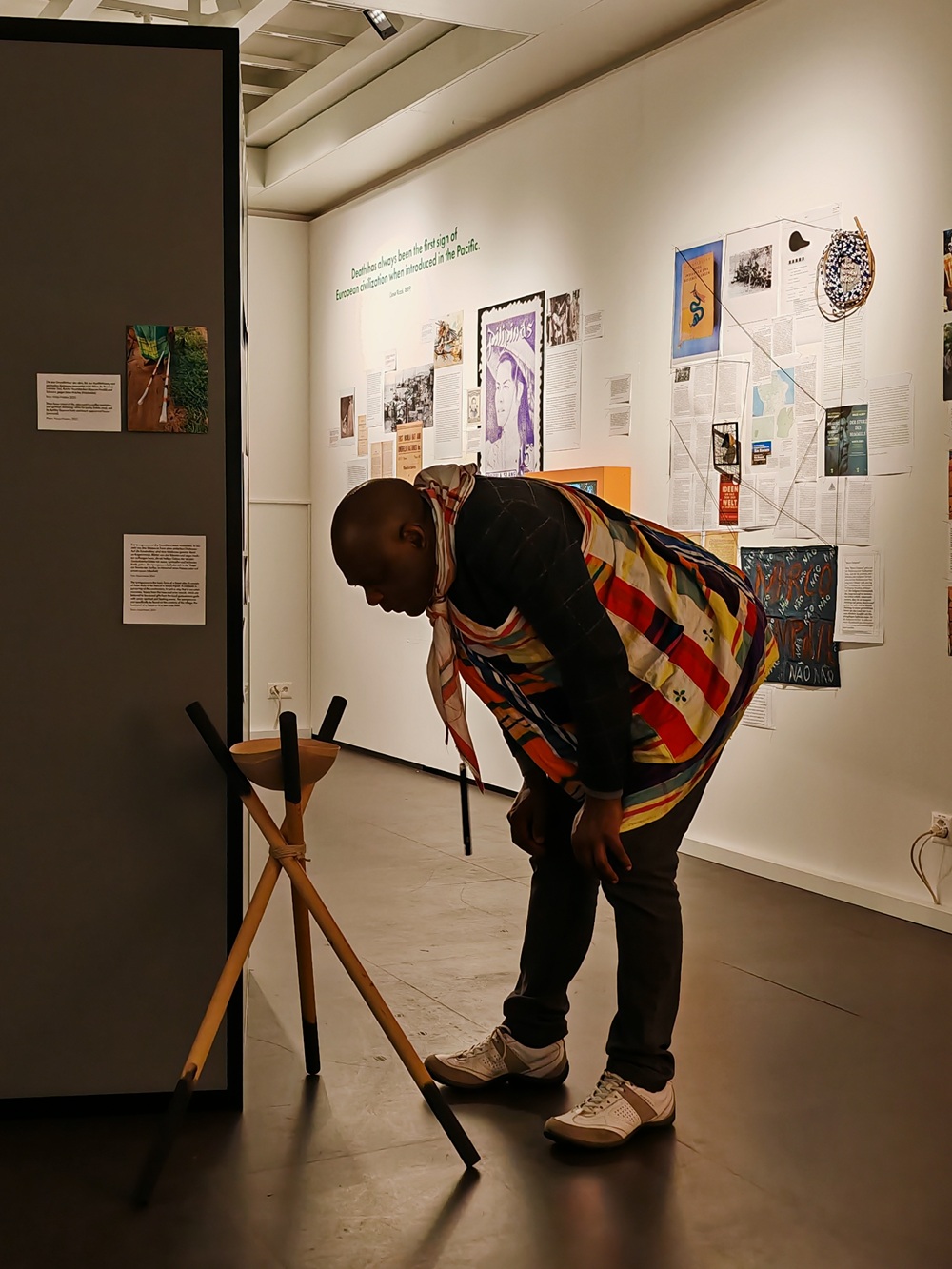
"Our aim is to find ways to decolonize the relation between the Saamaka and the outside world with regard to our own power structure, our belief systems and territory. To do so, we ask: 'How can we decolonize our own institutions and find new ways to share our stories with(in) the outside world and the next generations?'.
The collaboration with the Ethnographic Museum at the University of Zurich is of great importance for both, Totomboti and the Saamaka Museum, in our search to find new ways to preserve and share Saamaka cultural heritage. In our view, the EMZ has proved to be the best partner to accompany this project with the necessary care and respect.
In 2017, the Saamaka Totomboti collective and the Saamaka Museum in Piki Seei (Suriname) cooperated for the first time with the Ethnographic Museum to exhibit some 500 objects from the Surinamese collection of Heinrich Harrer in Zurich. This collection from 1966 is particularly important to us in terms of its composition, the time and place of collecting, and the Saamaka individuals who were active in the process. During the trustworthy collaboration with Maike Powroznik and the museum team we then donated a replica of the 18th century staff of the Piki Seei captaincy as one of the most important objects – one to the EMZ and one to our own museum.
Based on the community and museum research on Saamaka skilled practice, as well as our own subsequent new insights and discoveries about the “captain’s staff” and the power structure of Saamaka society through oral history research, Basia Edje Doekoe (assistent of the village-chief and grandson of the spiritual leader Akomisi, the main character in Harrer’s 1966 mission) had asked to restart a collaborative research project."